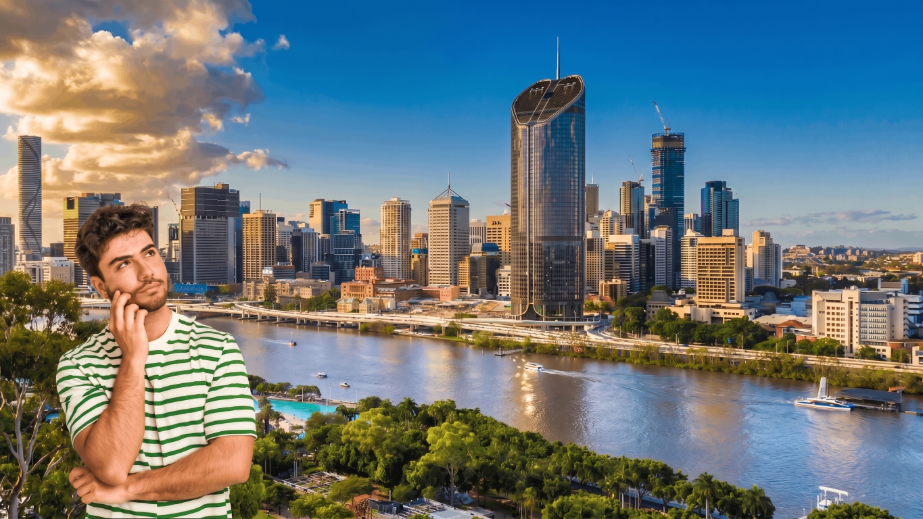
If you are planning to move to Brisbane with your family, one of the first questions that comes up is whether you should settle on the northside or the southside. It is a debate that locals take surprisingly seriously, and honestly, both sides have strong arguments. The truth is, the right answer depends entirely on what your family actually needs day to day. So let us break it down in a way that helps you make a real decision.
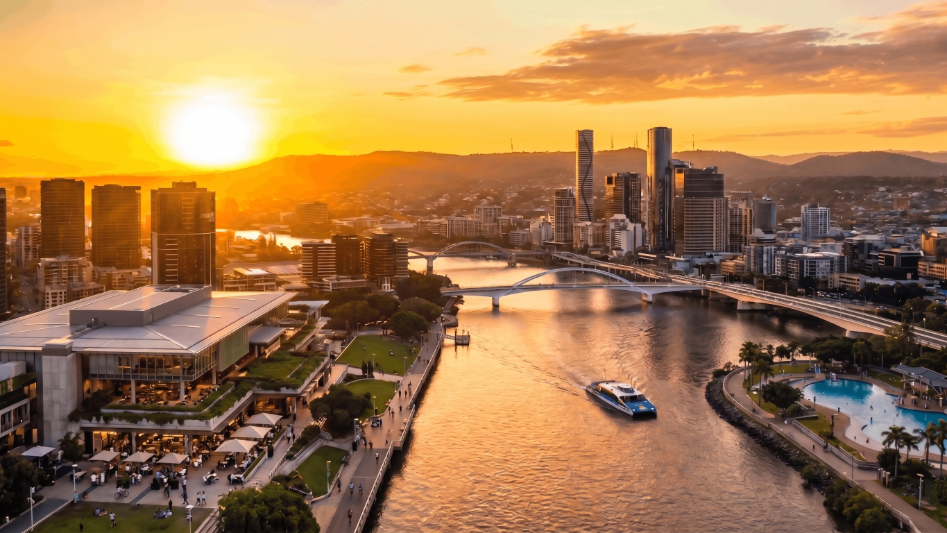
Brisbane is divided by the Brisbane River, and this natural divide has created two very distinct living experiences over the decades. The northside is generally known for its leafy streets, character Queenslander homes, strong school options, and excellent rail connections. The southside, on the other hand, leans more toward coastal living, multicultural dining, and proximity to cultural precincts like South Bank and the Gallery of Modern Art.
Neither side is better in every way. They are just different, and understanding those differences will save you a lot of time and second guessing.
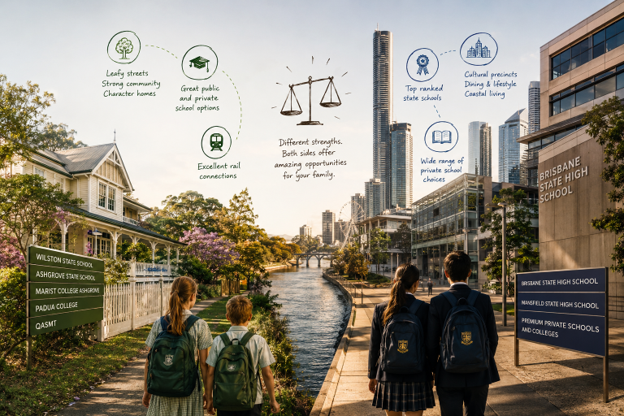
For most families, schools are the number one priority when choosing a suburb. Here is how the two sides compare.
Northside schools worth knowing:
Southside schools worth knowing:
Verdict on schools: Both sides offer excellent schooling, but the northside gives you more affordable options to live near high performing schools, while the southside holds some of the most sought after schools in the state.
This is where the two sides start to feel very different for family budgets.
| Area | Type | Median Price (2026) |
|---|---|---|
| Inner North (Wilston, Ashgrove) | House | $1.1M to $1.4M |
| Outer North (Mitchelton, Keperra) | House | $850K to $1M |
| Inner South (Camp Hill, Coorparoo) | House | $1.2M to $1.6M |
| Outer South (Mansfield, Sunnybank) | House | $850K to $1M |
Families working with a budget under $900,000 will find significantly more options on the northside. The southside commands a premium driven by proximity to the CBD, coastal access, and a concentration of premium private schools. That said, both sides have seen strong annual growth over 2024 to 2025, so neither is a poor investment choice in the long run.
If budget is a real concern for your family, the northside stretches further without pushing you into suburbs that feel disconnected from everything.
The northside is about rail and airport access, while the southside is about lifestyle by the water and easy Gold Coast trips.
Northside transport highlights:
Southside transport highlights:
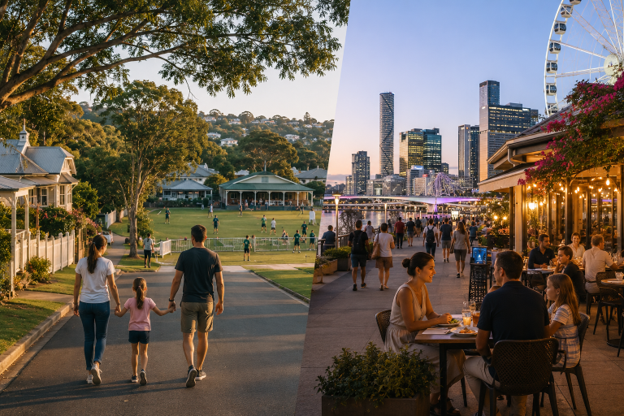
The northside offers larger blocks, more green space, quieter streets, and a suburban feel that rewards families with young children. Suburbs like Ashgrove and The Gap have a distinct community character, with local sports clubs, school based networks, and strong neighbour connections.
The southside offers higher walkability, more café culture, proximity to cultural precincts including South Bank and the Museum of Brisbane, and a more cosmopolitan feel. Suburbs like Camp Hill and Coorparoo have transformed into genuinely vibrant inner city family areas over the past decade, with excellent local dining and community markets without the CBD pricing.
In simple terms, if your family loves weekend sport, backyard space, and a quieter pace, the northside will feel like home. If you love being close to cultural events, markets, waterfront dining, and city energy, the southside suits that lifestyle better.
| Northside Suburbs | Why Families Love Them |
|---|---|
| Ashgrove | Great schools, leafy streets, strong community feel |
| Mitchelton | Affordable, local markets, good train access |
| Chermside | Large shopping centre, healthcare, schools |
| Wavell Heights | Quiet, elevated, good for primary school families |
| Albany Creek | Space, sporting clubs, natural surroundings |
| Southside Suburbs | Why Families Love Them |
|---|---|
| Camp Hill | Vibrant local area, strong school options |
| Coorparoo | Walkable, close to CBD, great cafés |
| Mansfield | Top performing high school catchment |
| Sunnybank | Multicultural food scene, affordable pockets |
| Wynnum or Manly | Bayside lifestyle, coastal feel for kids |
Regardless of which side appeals to you, there are a few practical things every Brisbane family should check before signing anything.
Always look up the Brisbane flood maps for any suburb you are considering, because flooding affects both sides and it is not always obvious.
Confirm the exact school catchment for your preferred suburb, since being one street outside a catchment boundary can change everything.
Check for aircraft noise if you are looking at northside suburbs closer to the airport corridor.
Visit the suburb on a weekday morning to get a real feel for the commute and how busy the roads actually get.
Here is the honest answer. If your family values affordable access to high performing state schools, green space, quieter streets, and strong rail connections, the northside is probably your best fit. Many families working with northside removalists find that suburbs like Mitchelton and Ashgrove give them everything they need without stretching the budget to breaking point.
If your family thrives on walkability, cultural richness, coastal access, and does not mind paying a premium for that energy, the southside delivers in a way the northside simply cannot match. Families who work with southside removalists to settle into areas like Camp Hill or Coorparoo often find they never want to leave once they are in.
The Brisbane River divides the city geographically, but your own priorities are what should divide your decision. Map your commute, check the school catchments, set a realistic budget, and then visit both sides with your family before making the call. Brisbane is a genuinely wonderful city to raise kids in, and honestly, you are going to be okay whichever side of the river you land on.
LOCATIONS & SUBURBS

From moving houses to office relocation services in records time, we’ve got the best removalist service in Brisbane – Book your next move with us online today!
© Copyright 2025 - Shift Buddies - All Rights Reserved | Designed, Marketing & Managed by Crazy Rise