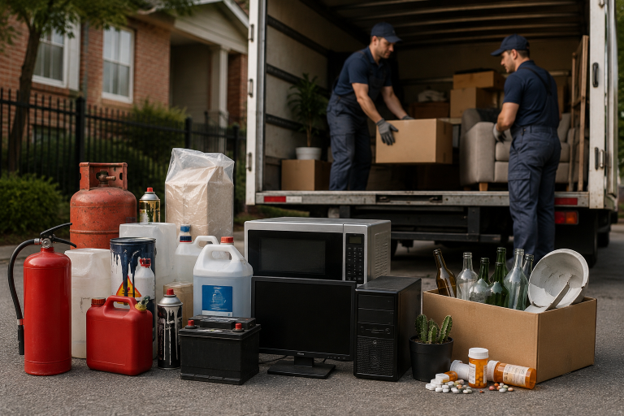
The clock on moving day runs on stairs, parking and carrying, not kilometres.
Picture two moves booked for the same Saturday. One goes from Toowong to Indooroopilly, roughly ten minutes by road. The other leaves Brisbane for Toowoomba, roughly two hours away. Most people assume the short job is the easy one, and it usually feels that way in the planning stage. Then the crew arrives at a third floor walk up with nowhere to park, and the maths changes. Ask a crew of Brisbane Removalists where a local moving day actually goes, and driving is rarely the answer.
A short move can take longer than a long distance one because most of the labour happens at the two addresses, not on the road. Stairs, lifts, parking, long carries, unpacked boxes and furniture that needs dismantling all add hours that distance never touches. A longer trip with easy access and a well prepared load can be quicker on site than a short trip with a difficult street and a three storey walk up.
Below, we look at where the hours go, when long distance moves really are slower, and what to tell a removalist so your quote matches reality.
Yes, but usually less than people expect for a local job. In Brisbane, local moves are commonly quoted on time, so distance matters through drive minutes, fuel and tolls rather than the kilometres themselves. Long distance and interstate moves are more often priced by volume and route.
The logic is simple. Across the city, a truck covers the gap between two addresses in a fraction of the time it takes to empty a home. Twenty minutes behind the wheel barely registers against several hours of lifting. Once the trip stretches to hundreds of kilometres, the road becomes the main cost, which is why those jobs are priced differently.
Two things are worth confirming on any quote:
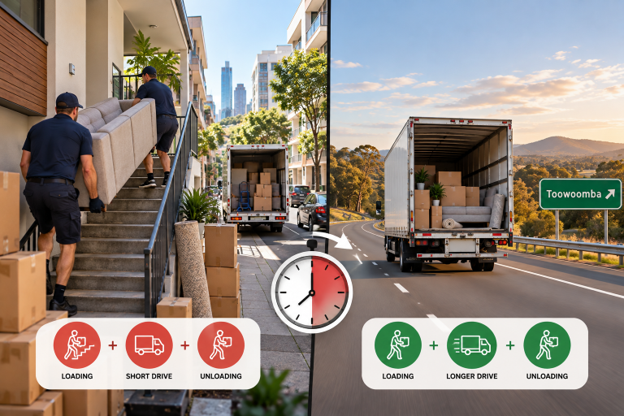
A short move can take all day because the fixed work of a move (loading, carrying and unloading) does not shrink when the distance does. Every obstacle at your address is repeated at the destination, so a difficult street or a flight of stairs is paid for twice. Driving is the smallest slice of a local job.
Think of a move as three blocks of time: load, travel, unload. Distance only stretches the middle block. Access, preparation and crew size stretch the outer two.
Here is a thought experiment with made up numbers, purely to show the mechanics (not client data):
The short move loses. Same furniture, same crew, and the only difference is how hard it is to get things out of the door and into the truck.
This is about crew hours on the job. A true interstate move still stretches across days once depot handling, shared truck (backloading) schedules and delivery windows are included. The claim here is narrower and more useful. On a local move, the road is not where your time goes.
Access affects removalist time because every item makes the same journey from where it sits to where the truck is parked, and access decides how slow and how heavy that journey is. A household involves hundreds of carries, so a small delay per trip becomes a large delay per move.
"Access" is really a bundle of separate problems. Here they are one by one.
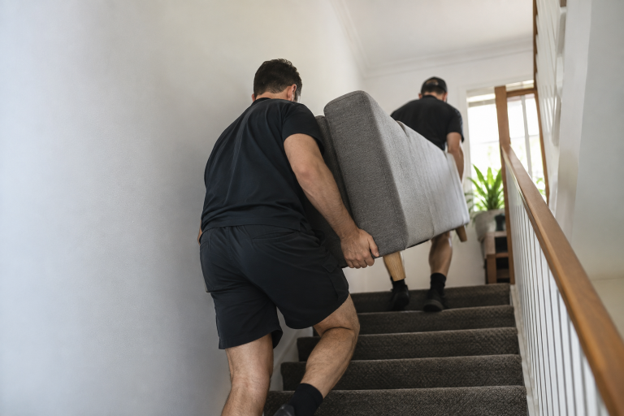
Often, yes. If the company bills by the hour, stairs raise the total because carrying up and down is slower, needs more rest and usually needs two people on heavy items. Some removalists add a separate stair charge, while others fold it into the time, so ask how yours handles it.
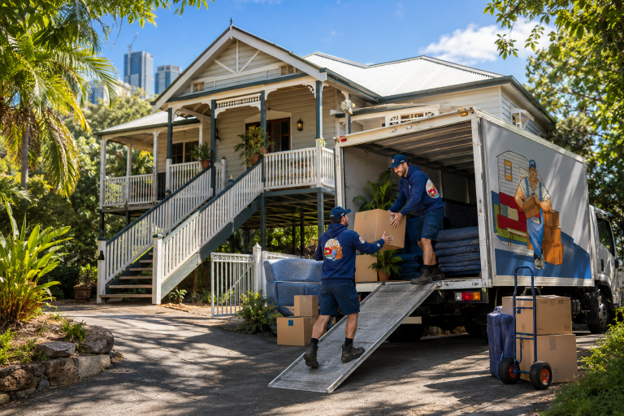
Stairs are more common in Brisbane than newcomers expect. High set homes usually have a flight up to the front door before you reach any internal stairs, and many older blocks and townhouses have no lift at all. Stairs also count at both ends: an easy ground floor departure followed by a third floor arrival still gives you a slow second half.
The item matters as much as the number of flights. A carton of books and a fridge are very different stair jobs, so mention your heaviest pieces.
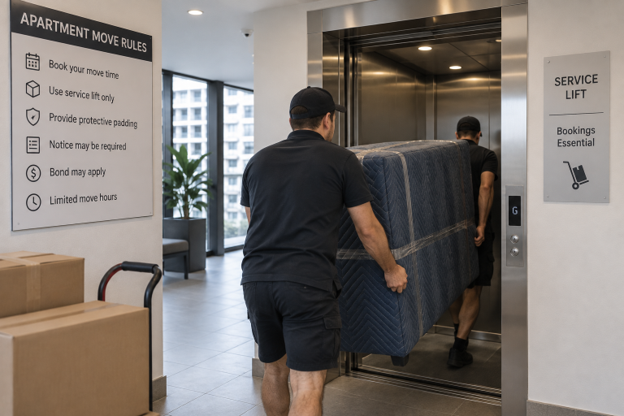
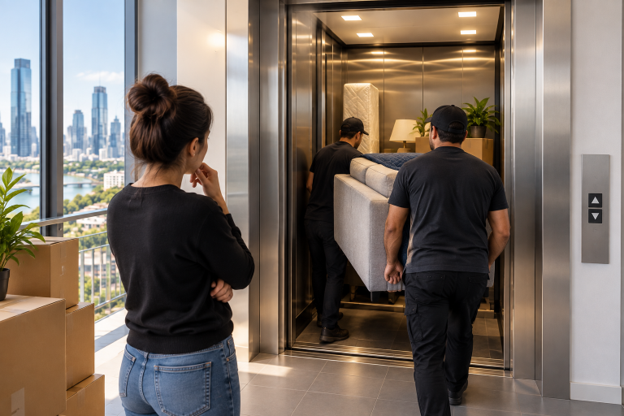
A lift does not automatically make an apartment move fast. Many buildings restrict moves to a booked window, require a padded service lift or limit the hours. If the booking ends before the job does, the crew may have to stop or switch to stairs.
Common surprises include:
Ask your building manager for the move in and move out rules before you book anyone.
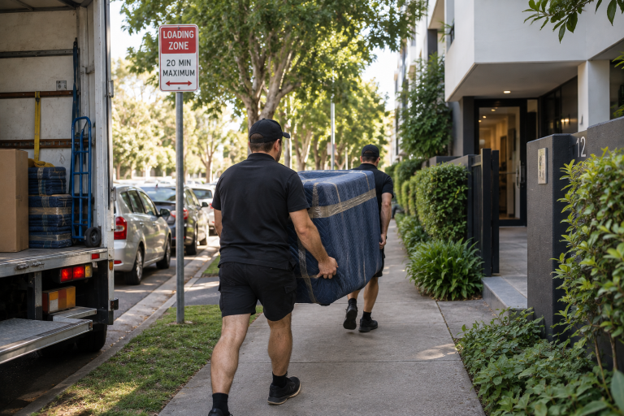
The distance between the truck and your door is one of the biggest hidden drivers of time. Every extra metre is walked on every carry, in both directions, at both properties.
Suppose a family home involves 300 carries (a rough assumption, not a measured figure) and the truck is 50 metres further from the door than ideal. Each carry adds 100 metres of walking there and back, roughly 30 kilometres across the job. Split between two movers, that is about 15 kilometres each, on top of the lifting.
Brisbane's parking rules explain why this comes up so often. Brisbane City Council allows a commercial vehicle to occupy a commercial loading zone for up to 20 minutes without a permit, provided it is actively loading or unloading goods.
Larger vehicles such as trucks fall under separate heavy and long vehicle parking rules. Twenty minutes is short next to a full household load. On busy streets, crews often end up parking further away and carrying, unless permits or a reserved spot are arranged in advance. Check the street signs at both addresses, and contact council if you are unsure. (Source)
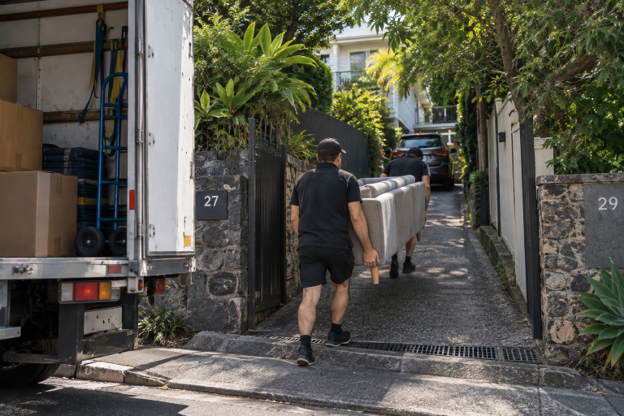
If the truck cannot reach the property, the job changes shape. Steep driveways, narrow lanes, gates, overhanging trees and tight cul de sacs can force the crew to park on the street or shuttle items with a smaller vehicle. In Brisbane, this shows up most in older inner suburbs and hillside streets. A quick photo of your driveway and street sent to the removalist takes a minute and can change which truck they bring.
Preparation decides whether the crew spends the day moving furniture or solving problems. Crew size decides how fast the moving part goes. Both are more in your control than the street outside.
More movers shorten the heavy, awkward parts of a job, but not in a neat proportion. Wardrobes, fridges and long carries go faster with three people because items move in pairs while another person keeps loading. Yet a narrow hallway has room for only so many bodies, and the hourly rate rises with crew size.
The sensible comparison is total cost across the expected hours, not the hourly rate alone. A third mover can pay for itself when carries are long, stairs are involved or the load is heavy.
Unfinished packing is one of the most common and avoidable delays. When a crew has to wrap glassware, empty drawers or box up a pantry, a moving job quietly becomes a packing job, and the hourly clock keeps running.
Aim for boxes that are closed, labelled by destination room and light enough to lift comfortably. Ask what "packed" means for your quote, and tell the removalist honestly if you will still be packing on the morning of the move.
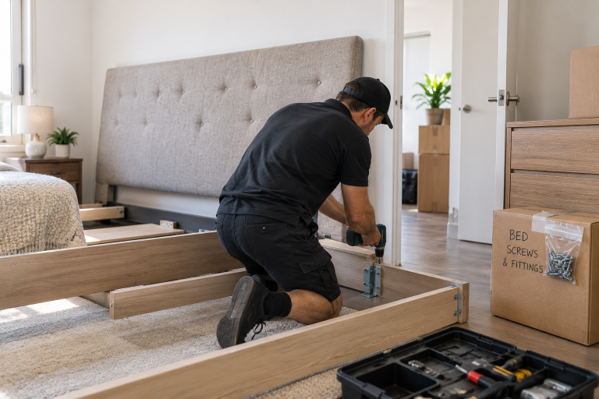
Beds, wardrobes, desks, bookcases and trampolines often will not fit through doors or stairwells in one piece. Dismantling takes tools and time, and reassembly repeats it at the other end.
Tell your removalist which items need to come apart, whether the crew will do it and whether it is included in the price. Keep screws and fittings in a labelled bag taped to the frame. Flag unusual items early too, such as pianos, safes, gym equipment and glass tabletops, because they can call for extra people or equipment.
Traffic hurts short moves in a sneaky way. The drive itself is brief, but a crew waiting in a queue is billed at the full rate, and a tight job may involve several truck runs if the load does not fit in one. Crossing between the northside and southside at peak hour is the classic time sink. Starting after the morning rush and avoiding school zone hours where you can keeps the middle block of the day short.
Give access details for both addresses, an honest list of bulky or unusual items, your packing status and your preferred date and time. Accurate access information matters most, because it is the piece that most often separates a quote from the final invoice.
Use this checklist when you request quotes:
If you can, add a few photos or a short walkthrough video of both properties. Then ask three questions in return: How are stairs and long carries treated in the quote? Is travel time included? Is the price hourly with a minimum, or fixed?
Distance is the part of a move you can see on a map, which is why it gets all the attention. The hours hide in the doorways, stairwells and parking bays. Reserve parking, finish packing a day early, dismantle furniture ahead of time, and share your access details honestly. Brisbane Removalists can only price what they know about, so a short, accurate briefing usually does more for your day than shaving a few kilometres off the route.
LOCATIONS & SUBURBS

From moving houses to office relocation services in records time, we’ve got the best removalist service in Brisbane – Book your next move with us online today!
© Copyright 2025 - Shift Buddies - All Rights Reserved | Designed, Marketing & Managed by Crazy Rise